

The Thirstiest Organ
Part 1 of 2 — What it is, and how to know if you have it

Welcome back to The Incredible Machine. I'm Dr. Paul Manhas, MD, Dad x3, husband, and Co-founder of Manhas Health Co. This two-part series came from a comment one of my patients left on the last issue.
On this issue: what dementia actually is, what counts as normal aging, and how to tell whether a memory worry is something or nothing.
On the next issue: how to prevent it, and how it’s treated.
The comment that started this
After the last issue — The Stasis Problem — one of my patients, Hely, left a comment I haven’t stopped thinking about. Usually we have these conversations in the exam room; this time she asked in public, so her note deserves a public answer. Here it is, word for word:
“Thanks for all the valuable information. Please include how to pick a good brand and how do you include flax seed into your daily meals. Please also consider Dementia as your future topic. Is it still incurable?”— Hely
Hely, thank you — truly. This is exactly the kind of question that makes writing this newsletter worth it, and it’s why the next two issues exist.
Let me take the heaviest part first: “Is it still incurable?” As of today, there is no cure that reverses dementia. But that’s only a sliver of the truth — because a large share of the risk is preventable, much of what looks like dementia is actually something else (and often treatable), and for the first time we have medicines that can slow it. Incurable, yes. Hopeless, no. That gap is what these two issues are about.
And Hely — your flax seed questions (how to choose a good one, and how to fold it into your meals) haven’t been forgotten; they’re getting their own dedicated edition soon. For today, let’s start where it matters most: understanding what we’re actually talking about, and how you’d know if it were happening to you.
Picture the brain at the end of a river
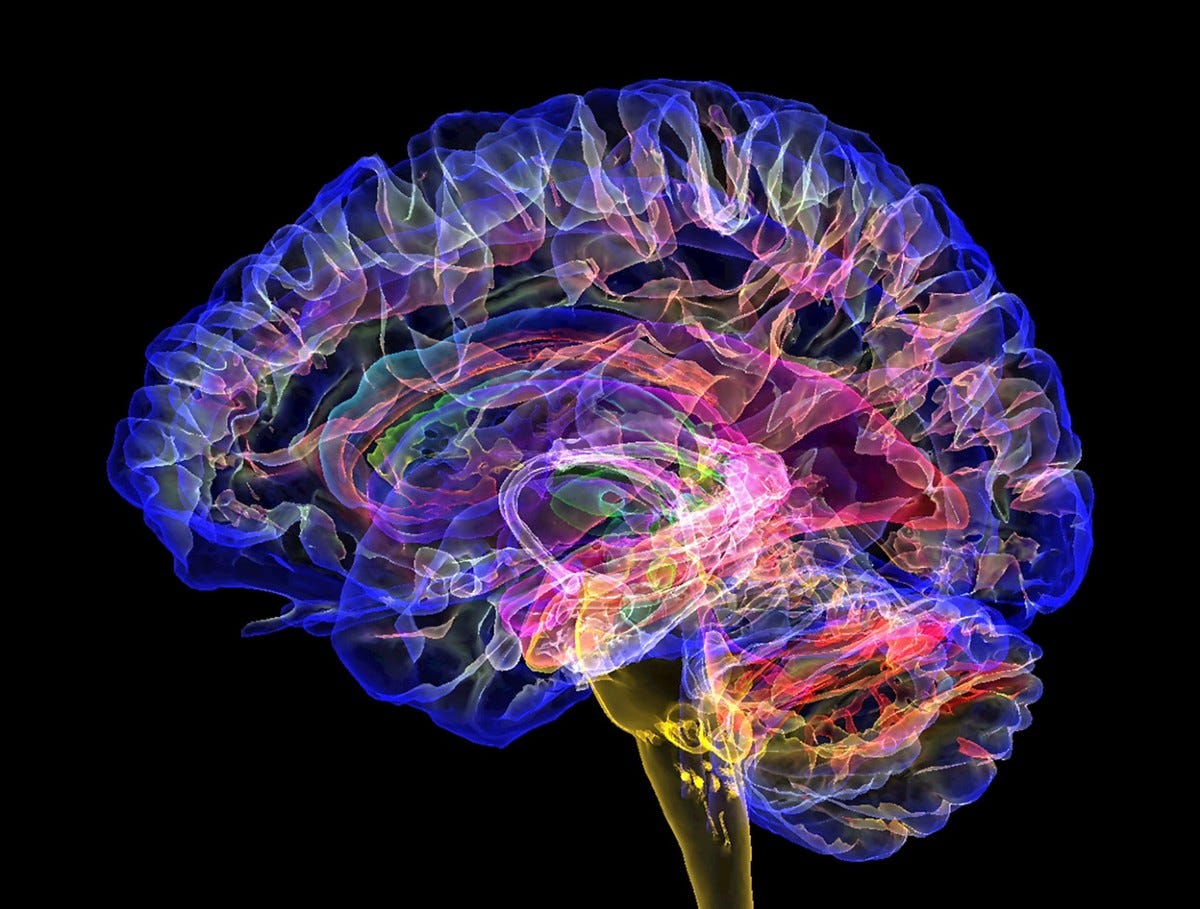
Last series we talked about stasis — how so much disease begins when something that should flow stops. A clot forms in still blood; a stone forms in still urine. Picture the body as a system of rivers, and disease as what grows in the stagnant water.
Now meet the thirstiest customer on that whole river system: your brain. It’s about 2% of your body weight, yet it burns roughly 20% of the oxygen and fuel you use at rest — and it keeps almost no reserves of its own. No fuel tank, no backup battery. It lives moment to moment on what the river delivers. Hold that picture: a healthy river needs strong flow and clean water, and the brain, sitting at the very end of it, is the first place to suffer when either fails. (Part 2 is all about keeping that river healthy.)
Not all dementia is the same
“Dementia” isn’t one disease — it’s an umbrella word for a brain losing function, and underneath sit several distinct culprits. Think of the big three as three different ways the same machine can break down: its wiring, its power supply, and its signalling. A clear picture of each helps everything that follows make sense.
Alzheimer’s disease (about 60–70% of cases). The problem is build-up. Two proteins go rogue: amyloid forms sticky plaques between brain cells, and tau collapses into tangles inside them. Picture sludge accumulating between the wires of a circuit while the wiring inside frays into knots — signals stop getting through. It usually starts in the hippocampus, the memory-filing centre, which is why the earliest sign is so often losing recent memories while older ones stay vivid. Biggest risks: age above all, then the APOE4 gene and family history.
Vascular dementia (second most common, roughly 15–20%). Here the trouble isn’t a rogue protein — it’s the plumbing itself. Strokes, whether one large one or a quiet shower of tiny “silent” ones, cut off blood to patches of brain, and those patches go dark, like a city losing power one neighbourhood at a time. Decline often arrives in steps. This is the river failing directly, and its biggest risks are the cardiovascular ones: high blood pressure (the leading driver), diabetes, high cholesterol, and smoking. It’s also the most preventable type.
Lewy body and Parkinson’s dementia (together, roughly 1 in 10). A third rogue protein — alpha-synuclein — clumps inside neurons, forming Lewy bodies. Same protein, two doorways: when movement problems come first (tremor, stiffness, slowness) we call it Parkinson’s, which can later bring dementia; when thinking changes and hallucinations come first, we call it dementia with Lewy bodies. Telltale signs: vivid visual hallucinations, attention that flickers like a faulty bulb, and physically acting out dreams — sometimes years before anything else.
And in real life, especially in older brains, these overlap — most often Alzheimer’s plus vascular damage together, so-called mixed dementia.
First, what’s normal?
Before we talk about anything going wrong, here’s something reassuring I wish more people knew: some forgetting is a completely normal part of aging. Dementia is not. Knowing the difference is the most important step — because most of the worry I see in my office turns out to be normal aging, not disease.
Think of your memory as the machine’s archive — a vast, well-stocked library. As we get older, nothing in that library burns down; the librarian just walks a little slower to the right shelf, so it takes a beat longer to retrieve what’s filed there. So occasionally forgetting a name and recalling it an hour later, blanking on a word that’s ‘on the tip of your tongue,’ misplacing your keys but retracing your steps to find them, or leaning on lists more than you used to — these are normal. The defining feature is that they don’t stop you living your life. You still drive, cook, manage your finances, and find your way home.
Concerning memory loss is about the pattern, not the occasional lapse — specifically its frequency, its progression, and its impact on daily life. The red flags: forgetting whole recent events rather than odd details, asking the same question over and over, getting lost in familiar places, struggling with once-routine tasks like paying bills or following a recipe, real changes in personality or judgment, and — a telling one — others noticing the problem before you do. There’s also an in-between stage doctors call mild cognitive impairment (MCI): more slipping than expected for your age, noticeable to you and those close to you, but not yet interfering with independent living. Importantly, not everyone with MCI develops dementia — some stay stable, and some even return to normal.
My clinical view: Here’s a pattern I lean on heavily. When the person sitting across from me is the one worried — they booked the visit, they’re tracking their own slips — it usually points away from dementia, toward normal aging, a low mood, or something like a nutrient deficiency. The real warning sign runs the other way: when it’s the partner or family who notices — ‘she keeps repeating the same question,’ ‘he can’t manage the bills anymore’ — while the person themselves doesn’t see it. Insight tends to fade with true memory disease. So who’s worried, and who noticed first, tells me a great deal before any test.
Is it memory loss, or is it attention?

Here’s the reframe that brings the most relief in my office. Many people worried about their memory don’t actually have a memory problem — they have an attention problem. And that difference matters enormously, because one is often fixable this week.
Attention is the gateway to that archive. Before the machine can file a memory on a shelf, it first has to record it — and you can’t store what you never truly captured. If memory is the library, attention is the camera that takes the picture in the first place: be distracted when the moment happens and you never press the shutter, so later you go hunting for a photo that was never taken. When you “forget” where you put your keys, the usual culprit isn’t a broken archive — it’s that you set them down while half-listening to a podcast and thinking about dinner, so the camera never fired. The modern engine of this is multitasking, which slices attention so thin almost nothing gets recorded cleanly. Then we blame the library.
Protect your attention (and stop “losing” memories):
Single-task what matters; you cannot encode well while divided.
Be present at the point of capture — when you set your keys down, notice it (even say “keys on the hook”). One second of attention is a photo taken instead of missed.
Kill the pings; each interruption fractures attention and quietly erases what you were encoding.
Fix the upstream basics — sleep, stress, and mood are the foundation of attention.
From the exam room: I distill all of this into one phrase I repeat constantly: do one thing at one time. It sounds almost too simple, but it’s the whole game. Eat dinner at the table with the TV off. Drive with the radio quiet and actually notice the drive. Watch your show without scrolling your phone beside it. You’re not just being present — you’re letting the machine’s camera take one clean photo at a time, instead of asking it to capture six things at once and keeping none of them.
How we actually check: the MoCA
If you’re genuinely worried, this is what standardized testing is for — and it’s more reassuring than guessing. A screen like the MoCA (Montreal Cognitive Assessment) is a quick, roughly 10-minute, 30-point test a clinician administers. Its real value here: it checks several systems separately — attention, memory, language, visual-spatial skills, and more. Because attention and memory are scored independently, the pattern of results helps a clinician see whether the trouble is truly in memory storage or really in attention. A score of 26 or higher (out of 30) is generally considered normal.
It’s a screen, not a diagnosis — a normal score is reassuring, and a low one is a prompt for a closer look (sometimes fuller neuropsychological testing), not a verdict. Either way, it turns a vague, sleepless fear into a concrete next step.
One important caution: the MoCA is freely available online, and I’d gently urge you not to go looking for it to “test yourself.” It’s built to be scored and interpreted by a clinician, and it is explicitly not meant to be studied or practiced. Because part of what it measures is executive function and memory, rehearsing it beforehand doesn’t reassure you — it quietly corrupts the result, inflating your score and potentially masking a real problem we’d otherwise have caught. If memory is on your mind, let the test do its job: come in and take it fresh.
If something turns up: start with what’s fixable
Say the MoCA is abnormal, or you have a strong family history and want to understand your risk. The next steps aren’t about leaping to the worst conclusion — they’re about looking carefully, starting with the most hopeful possibility: that something treatable is to blame.
Several conditions can look exactly like dementia and many are reversible. A good workup checks for: low vitamin B12 (a simple blood test, easily corrected); an underactive thyroid (also a blood test, also treatable); depression, which in older adults can blunt memory so convincingly it’s sometimes called ‘pseudodementia’; the side effects of certain medications (some sleep aids, bladder drugs, and sedatives are notorious for fogging thinking); heavy alcohol use; and untreated sleep apnea, which starves the brain of oxygen night after night. There’s even a condition called normal pressure hydrocephalus — fluid build-up around the brain causing memory trouble, unsteady walking, and bladder problems — that can sometimes be relieved with treatment. Alongside these, the everyday panel earns its place: blood pressure, HbA1c, a lipid panel, and — worth adding — homocysteine, since high levels are linked to brain shrinkage and are treatable.
My clinical view: A meaningful share of “memory loss” I evaluate turns out to be something correctable — a low B12, a sluggish thyroid, untreated sleep apnea, a medication, or low mood. That’s exactly why I’d rather someone come in and get looked at than sit at home assuming the worst. The answer is often more hopeful, and more fixable, than the fear that brought them in.
The “Alzheimer’s gene” in the headlines

You may have seen this one in the news — the so-called “Alzheimer’s gene” — usually wrapped in a frightening headline and stripped of the context that makes it bearable. So let me give you that context. There’s a gene called APOE, and it comes in three common versions — E2, E3, and E4 — like three settings on a dial. E3 is the common, neutral middle. E2 is protective and actually lowers risk. E4 is the risk-raising version, and the strongest common genetic risk factor for late-onset Alzheimer’s. You inherit one copy from each parent, so the combination matters: one copy carries about a 2-to-3-fold higher risk, two copies something on the order of 8-to-12-fold, often with earlier onset.
A striking recent finding: in 2024, a large study in Nature Medicine argued that people with two copies of E4 may represent a distinct, genetically-driven form of Alzheimer’s — nearly all showed Alzheimer’s brain changes by their mid-sixties. But read the fine print the researchers themselves stress: having the biomarkers is not the same as developing symptoms. Even among two-copy carriers, some never go on to clinical dementia. The dice are heavily loaded — but they are still dice.
So should you test? For most people, the guidelines say no — not as a routine predictive test. Choosing Wisely, the American Academy of Neurology (reaffirmed in 2024), and medical-genetics bodies all advise against ordering APOE to predict Alzheimer’s, and against direct-to-consumer testing. The reasoning is sound: the result is a probability, not a verdict; there’s no treatment that changes your outcome based on the gene alone; and, as one genetic counselor put it, what you learn you cannot un-learn.
Here in Canada, that caution is baked right into the system — and I mean that literally. I recently ordered this exact test for a patient, and what came back wasn’t a genotype at all. It was a note: after consultation with the medical biochemist, the test was cancelled. That’s not a glitch — it’s the guidelines working as intended, the lab declining to run a predictive test that isn’t clinically indicated. If you want it privately, it’s available in some provinces (including here in BC) for roughly $175 out of pocket, since it isn’t covered by public health insurance, with genetic counselling attached. But the friction is itself the message: this isn’t a test the system wants people ordering on a hunch — and most of the time, that’s the right call. (One caveat: direct-to-consumer kits often report APOE status, so some people learn theirs without ever intending to.)
One more frontier worth knowing: in May 2025 the FDA cleared the first blood test for Alzheimer’s (a marker called p-tau217). A real milestone — but it’s cleared to help diagnose people who already have memory symptoms, not to screen healthy people for future risk, and early real-world reports have flagged meaningful false-positive rates. It is not, today, a “find out if I’ll get dementia” test.
So where does that leave you? For a small number of people — those with a very strong family history who genuinely want to understand where they stand — testing can be worthwhile, done properly and with counselling. It may tell you your odds are higher than average. But here’s the part I want you to hold onto, because it’s the whole point: it changes nothing about what you should do next. Higher risk or lower, gene or no gene, the prescription is identical — live your healthiest life, and live it to the fullest. That is squarely within your control in a way your genes will never be.
Where I have to be straight with you
A worry about memory is worth taking seriously — and worth putting in perspective. Most occasional forgetting is normal aging. A lot of the rest is attention, stress, sleep, mood, or something else treatable. And even genuine risk genes are probabilities, not prophecies. The point of getting evaluated isn’t to confirm a fear — it’s to replace guessing with knowing, and very often to find something you can actually fix.
How I apply this
Know what’s normal. Occasional name-blanking and misplaced keys, with intact daily life, are usually just aging.
Separate attention from memory. Much ‘forgetting’ is distraction — single-task and cut the pings before assuming the worst.
If it’s persistent or progressive, get evaluated. A MoCA is a calm first step, not a verdict.
Ask for the reversible checklist. B12, thyroid, mood, medications, sleep, plus the everyday panel and homocysteine — fixable causes worth ruling out.
On genes, don’t rush. Skip routine APOE testing unless you have a specific reason; if you’re considering it, start with a genetic counselor, not a saliva kit.
One more thing
If any of this raises questions about your own situation, that conversation — what’s worth testing, what’s worth treating, and what’s worth setting aside so you can stop worrying — is exactly what a family physician is for. It’s the heart of what we do at Manhas Health Co, not just answers, but perspective.
Coming next — Part 2: Prevention & Treatment. Now that you know what it is and how to tell if you have it, the hopeful half: the lifestyle levers that genuinely lower your risk, an honest tier list of the supplements you keep asking me about, and the brand-new medications that are changing what’s possible. See you next issue.
Keep moving,
Dr. Paul Manhas, MD, CCFP
Co-founder & Director of Performance Services, Manhas Health Co.
Clinical Instructor, UBC Faculty of Medicine
Follow me on Instagram for more insights and Q&A: @drpaulmanhas
Sources
Memory, forgetfulness, and aging (National Institute on Aging) — https://www.nia.nih.gov/health/memory-loss-and-forgetfulness/memory-problems-forgetfulness-and-aging — normal age-related forgetfulness vs dementia; reversible causes.
Montreal Cognitive Assessment (MoCA) — overview — https://strokengine.ca/en/assessments/montreal-cognitive-assessment-moca/ — brief clinician screen scoring attention and memory separately.
APOE4 homozygosity as a distinct genetic form of Alzheimer’s (Fortea, Nature Medicine 2024) — https://www.nature.com/articles/s41591-024-02931-w — two-copy carriers showed AD biomarkers early; symptoms not guaranteed.
First FDA-cleared blood test for Alzheimer’s (p-tau217) — https://pmc.ncbi.nlm.nih.gov/articles/PMC12483549/ — cleared May 2025 for symptomatic adults 55+, not for screening healthy people.
Very informative article! Thanks